
1:30pm
Room 1, Foyer upper floor
Coppicing is one of the earliest forms of woodland management and has provided a sustainable source of timber for thousands of years. Coppice is created by cutting trees to ground level, creating a ‘stool’, and encouraging new shoots to grow. When coppice is actively managed, it produces straight sticks that can be used for hurdles, hedging, baskets, and building. It also encourages longevity in the trees being coppiced and increases biodiversity by allowing more light and warmth to reach the woodland floor, encouraging the growth of woodland flora, which then attract more butterflies and insects, which are in turn a food source for birds. However, in the last century or so, estimates are that actively managed coppice woodland area in the UK has fallen by nearly 95%. Here at Green Aspirations, we’re trying to change that by promoting the benefits of coppice and encouraging people to join us in the woodlands to restore this ancient art. This session will reflect on the work we’ve already done to restore hazel coppice in central Scotland, what we use the coppice sticks for, and our plans – and hopes – for the future of coppice in Scotland.
Dr Jo Edwards
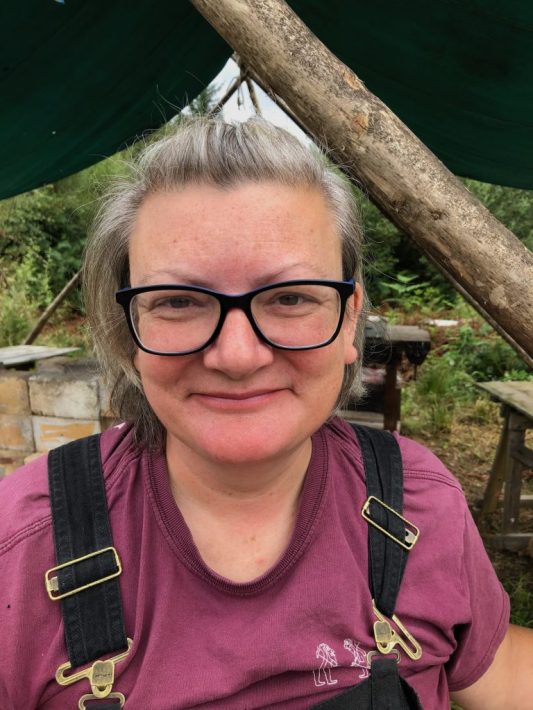
Dr Jo Edwards is a Director of Green Aspirations, a social enterprise committed to reconnecting people to the landscape through sustainable woodland management and traditional crafts. Jo became involved with Green Aspirations in 2016, and became Director in 2017. Since then, she’s taken the lead on all the ‘behind-the-scenes’ activities that keep the CIC running, as well as making charcoal and other products. She returned to college in 2024 to complete a City & Guilds in Forgework, and now teaches blacksmithing workshops. Jo also supports university researchers to communicate their work, running her own micro-business since 2014.