10:30am
Room 1, Foyer upper floor
At The Lint Mill, our 13-acre organic smallholding in the Southern Uplands, we’ve seen first-hand how quickly land can come back to life when given the right care. Just four years ago, one of our fields was just an ordinary field—over grazed, little plant diversity, and little wildlife. Today, it’s a flourishing meadow, buzzing with bees, alive with butterflies, and filled with birdsong.
In this talk, we’ll share the story of how that transformation happened. With the support of the *ScotFWAG Birds & Bees Project, we set out to rebuild the health of the soil and encourage a wide mix of grasses and wildflowers. As the plants returned, so did the insects, followed by the birds and other wildlife that depend on them. Step by step, the field became part of a richer, more balanced ecosystem.
This is not a technical manual or a grand theory—it’s a practical story of hope. It shows how small changes on a small farm can make a big difference for nature. In just four years, we’ve learned that regeneration is not only possible, but surprisingly fast. Our meadow is living proof that farming and wildlife can thrive together.
Deborah Richardson-Webb
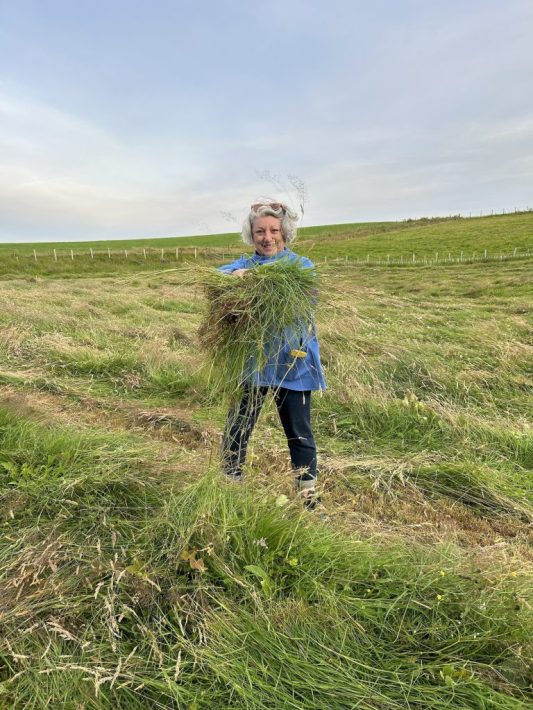
Deborah Richardson-Webb is a regenerative farmer, educator, and artist living in Scotland’s Southern Uplands. At The Lint Mill, the organic smallholding she runs with her husband Colin, she tends rare breeds, wild meadows, and a no-dig kitchen garden, weaving farming with creativity and care. She shares her knowledge through courses in smallholding and heritage crafts, and mentors new farmers across Scotland. A trained Natural Change facilitator and Farming Champion for NFFN, Deborah believes farming is more than livelihood — it is relationship, resilience, and reciprocity — a way of living deeply with the land and fostering connection between people and nature.